The short answer
- Choose LVP for kitchens, bathrooms, laundry rooms, basements and homes with pets: it handles everyday spills much better.
- Choose laminate for dry living rooms and bedrooms when you want a wood look on a budget and a hard, scratch-resistant surface.
- Both float over a pad, both need a flat floor underneath, and neither can be sanded and refinished.
- Installed labor is similar: LVP about $2.50–$4.50 per sq ft, laminate about $3 per sq ft.
LVP and laminate look almost the same in the store: a printed wood look on a click-together plank. Underneath, they're very different floors, and the right choice depends on the room.
We're Vision Flooring in Everett, WA. We install both, so we don't have a reason to push one over the other.
What's the difference between LVP and laminate?
The core. LVP (luxury vinyl plank) is built on a vinyl-based core. Laminate is built on a wood-fiber core with a photo layer and a hard clear wear layer on top.
LVP / LVT
Vinyl-based core. Handles everyday spills well, feels a little softer and warmer underfoot, and is usually installed the day it's delivered.
Laminate
Wood-fiber core. Very hard, scratch-resistant surface and a crisp wood look, but the core can swell if water gets into the seams. Acclimates inside your home for 3–5 days before installation.
Which is better with water?
LVP, by a wide margin. That's why it's the usual choice for bathrooms, laundry rooms, mudrooms and basements.
- LVP handles spills, wet paws and splashes well. Water ratings still depend on the exact product, and water can get underneath through edges and seams, so big leaks are still a problem.
- Laminate is sensitive to moisture. Spills need to be wiped up quickly, and laminate is best kept to dry rooms. Over concrete, we always seal the concrete first.
If water has already reached your floor, see water-damaged hardwood, laminate and LVP floors.
Which lasts longer and resists scratches?
Laminate's surface is harder; LVP is more forgiving overall. Laminate shrugs off everyday scratches well. LVP can show fine scratches more easily, but it's quieter, a little softer and doesn't mind spills. With either floor, the product quality matters more than the category.
Very cheap, clearance or discontinued products can have weak locking systems and little manufacturer support, and installation can't fix a defective product. If a product you're considering looks risky, we'll tell you before you buy it.
How are they installed?
Both are usually floating click-lock floors over a flat, prepared surface.
- A flat floor matters for both. Thin planks show dips and bumps, and an uneven surface can break the locking system. Light preparation is normal; bigger leveling is quoted separately. See how to prep a subfloor.
- Pad: laminate always goes over a pad, attached to the planks or a separate roll. LVP gets a pad only when the product needs one, and never a second pad under attached-pad planks.
- Glue-down: LVP can also be glued down, which is common over concrete (about $6 per sq ft). Laminate is click-lock only.
- What they go over: plywood, concrete and suitable existing hard floors, including tile, as long as the surface is solid and stable.
Which floor for which room?
Kitchen
LVP is the safer choice. Laminate works in kitchens where spills get wiped up quickly.
Bathroom and laundry
LVP or LVT.
Basement over concrete
LVP, often glued down. Laminate only over sealed concrete in a dry basement.
Living room and bedrooms
Either. Laminate gives a crisp wood look at a great value; LVP is quieter and handles pets well.
 Kitchen
 Bedroom
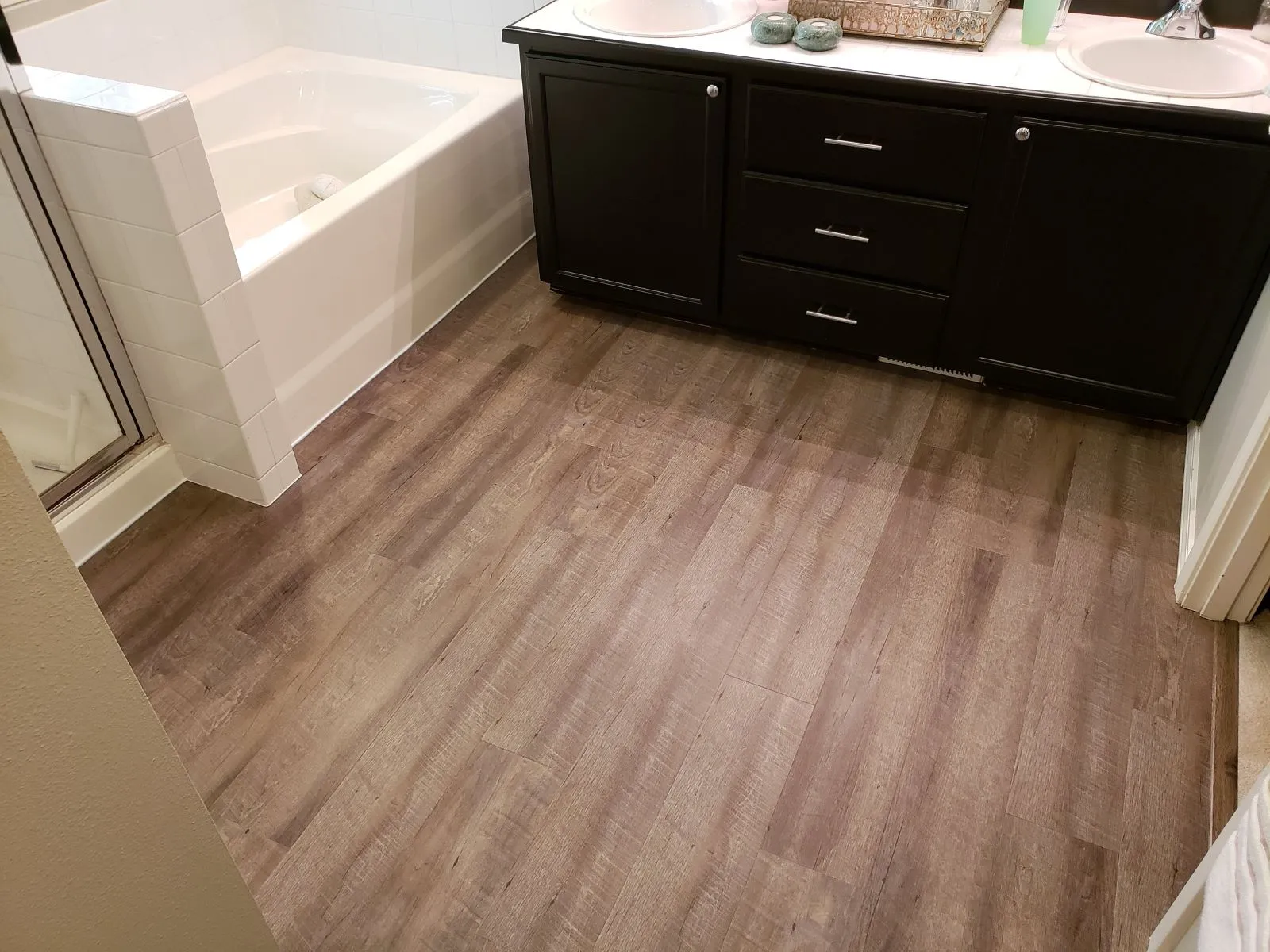
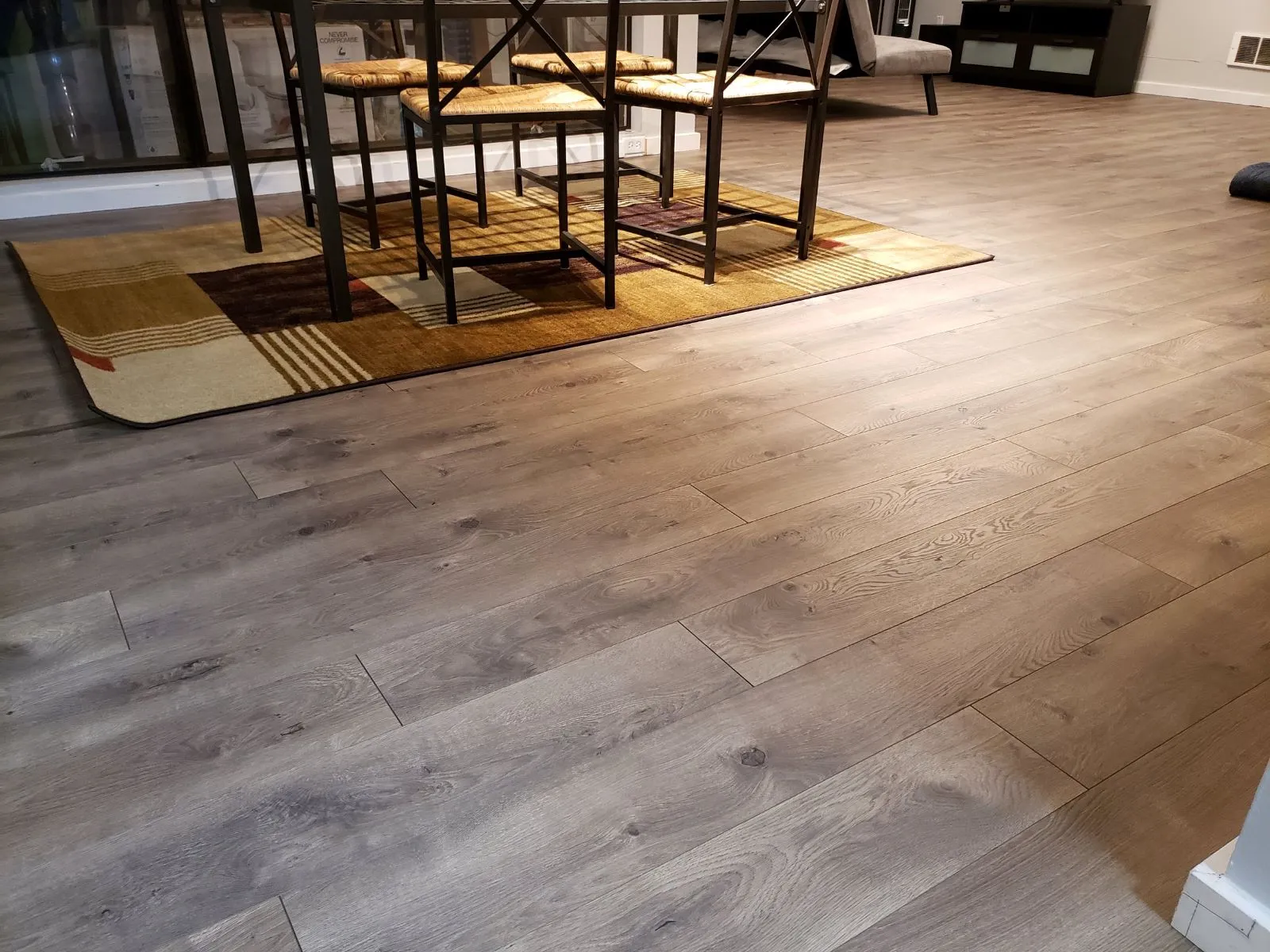
Wood-look plank floors in a kitchen and a bedroom. In wet rooms, the core matters more than the look.
Mixing floors room by room is common, with the right transitions between them. For the full comparison with hardwood and engineered wood, see our flooring guide.
What does each cost to install?
LVP and LVT labor is typically $2.50–$4.50 per sq ft; laminate is about $3 per sq ft, including installing a separate pad. Flooring and pad material are extra, and removal of the old floor, leveling, concrete sealing and appliance moves are listed separately. There's a $800 project minimum. Try our flooring calculator for a rough number.
Frequently asked questions
Can I add more of the same floor later?
Only with exactly the same brand, product run and color, and even then a seamless continuation isn't always possible. Laminate styles are discontinued often, so keep 2–3 spare boxes in a dry place.
Can LVP or laminate be refinished?
No. Neither can be sanded or recoated. Damaged planks are replaced instead, which is another reason to keep spare boxes.
Can they go over carpet?
No. The carpet and pad come out first, and the floor underneath is prepared.