The short answer
- Big leak? Call a water mitigation company and your insurer first. We repair and replace floors and baseboards once everything is dry.
- Hardwood can often be saved, but sanding it before the moisture is back to normal causes new problems.
- Swollen laminate usually has to be replaced. It can't be sanded, and swollen edges don't shrink back.
- "Waterproof" LVP can still trap water underneath. It often comes up so the subfloor can dry.
A burst supply line, an overflowing dishwasher, a leaking water heater: once water reaches your floors, the questions start fast. Can the hardwood be saved? Does the laminate have to come out? Why is someone pulling up the "waterproof" LVP?
We're Vision Flooring, a flooring contractor in Everett, WA. Before we focused only on floors and baseboards, we spent 5–6 years working full-time in water damage restoration for restoration and insurance companies. So we know what happens before the floor work starts, too. Below are straight answers to the questions homeowners ask us most, floor type by floor type.
What does Vision Flooring do after water damage?
We repair and replace floors and baseboards once the house is dry. We don't extract water, run drying equipment, test for mold or rebuild drywall and cabinets; a water mitigation company handles that part. See floor repair after water damage for exactly what we do and don't do, and how we work with your insurance.
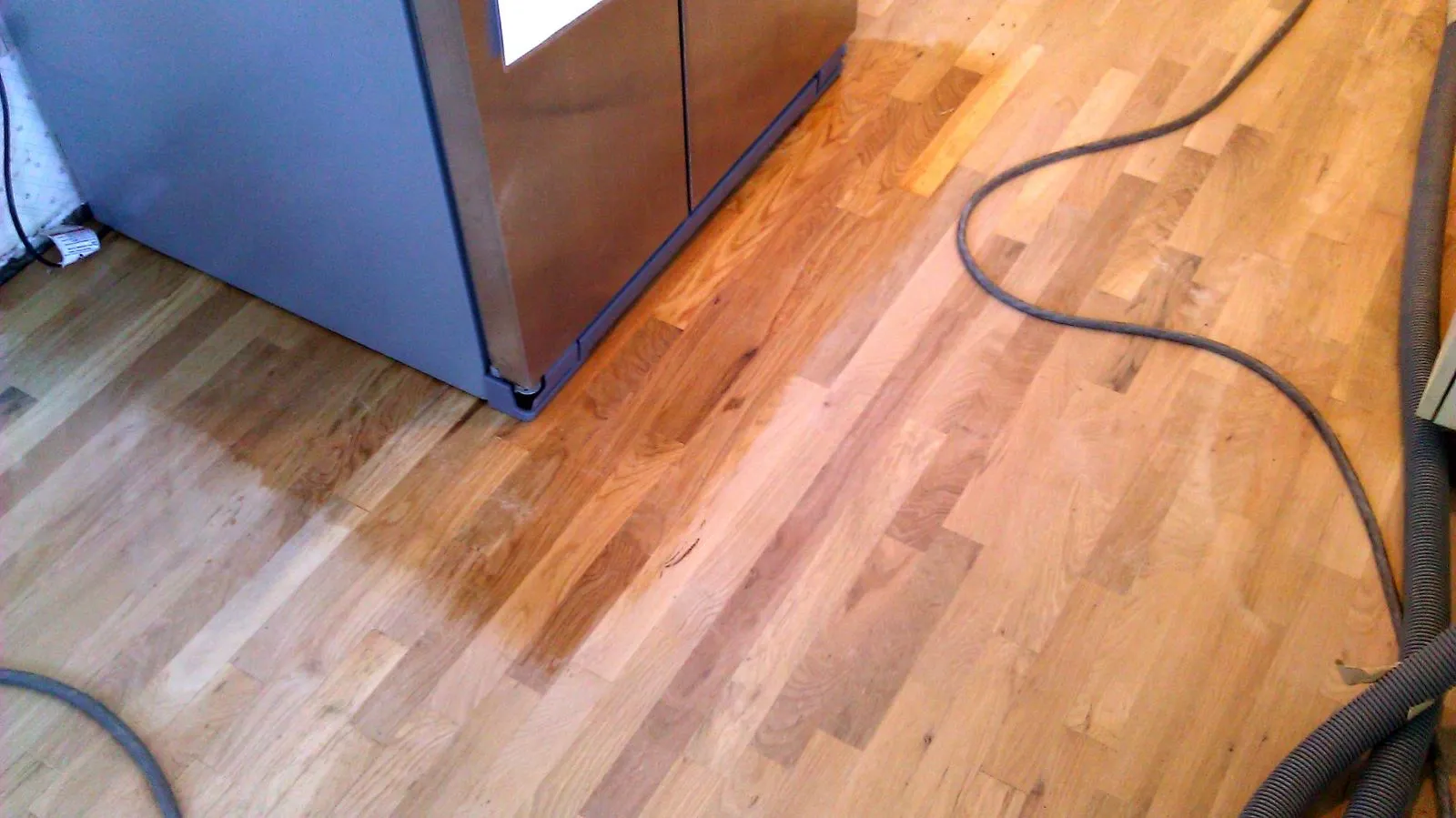
The one drying exceptionA small, contained wet area, like a slow drip under the refrigerator from an ice-maker line, we can usually dry as part of the floor repair. Not sure if yours counts as small? Email photos to office.vflooring@gmail.com or call 425-218-4234.
Who do I call first: a water mitigation company or a flooring contractor?
For anything bigger than a small spot, call a water mitigation company first, plus your insurance company if you plan to file a claim. Mitigation crews (also called water damage restoration companies) extract the water, tear out materials that can't be saved, and run drying equipment until the structure is dry. A flooring contractor comes in after that to repair or replace the floors.
The usual order: stop the water, call your insurer if you're filing a claim, let the mitigation company dry the house, confirm it's dry with moisture readings, then repair the floors and put the baseboards back. Each step is explained in water damage repair, step by step.
You can contact us earlyWe'll come out before the drying is done, photograph and measure the damaged floors, and put together a flooring estimate for your adjuster, so you're ready to schedule as soon as the house is dry.
What should I do in the first 24–48 hours to protect my floors?
Stop the water, get standing water off the floor, and document everything before anything is removed. The EPA recommends drying water-damaged areas within 24–48 hours to help prevent mold, which is why speed matters.
- Shut off the water at the appliance or the main valve.
- Turn off power to the area if water is near outlets, cords or appliances.
- Get standing water up with towels, a mop or a wet vac. The longer it sits, the deeper it soaks into wood and laminate.
- Pull up wet rugs and move furniture so they don't trap moisture or stain the floor.
- Take photos and video of the floor, the water source and any swelling before anything gets torn out.
- Find your flooring info: spare boxes, leftover planks, receipts or the product name. It makes matching much easier later.
- Don't sand, nail or seal warped boards, and don't point heaters at wet hardwood. Drying wood too fast can crack and split it.
Can water-damaged hardwood floors be saved?
Often, yes. Solid hardwood is the one floor type that can usually be dried, sanded and refinished after water damage. Whether yours can be saved depends on how long the water sat, how the boards reacted, and how much wood is left to sand. Boards that can't be restored are cut out and replaced.

Signs of water damage on hardwood, and what they usually mean
Cupping
Board edges sit higher than the centers because the bottom of the board absorbed moisture. Mild cupping often relaxes as the floor dries. Sanding and refinishing then flattens what's left.
Crowning
Board centers sit higher than the edges. This usually happens when a cupped floor gets sanded before it dried. It may settle over time or need another sanding.
Buckling
Boards lift up off the subfloor. This is the most severe reaction, and those boards are usually replaced.
Dark or black stains
Common in oak when water sits for a while. Deep stains rarely sand out, so stained boards are usually cut out and replaced.
Solid vs. engineered hardwood
Solid hardwood can be sanded and refinished several times over its life. Engineered hardwood has a real-wood top layer over a plywood or composite core. If that core swells or the layers separate, the boards have to be replaced. A thin top layer may allow only a light sanding, or none at all.
How long should I wait before refinishing water-damaged hardwood?
Wait until the wood and subfloor are back to normal moisture levels, not just until the floor feels dry. After the drying equipment is gone, a cupped floor can take a few weeks or more to settle. Sanding too early is the most common mistake we see: the boards keep drying after they're sanded flat, and the floor ends up crowned.
Before we sand, we check the boards with a moisture meter and compare the damaged area to a dry, unaffected part of the same floor. When the readings line up and the floor has stopped moving, it's ready. See how our hardwood floor refinishing process works.

Can you replace only the damaged hardwood boards?
Yes. We cut out the damaged boards and weave in new ones (often called "lacing in"), staggering the joints so the repair blends into the rest of the floor. Then we sand and refinish the whole room or connected area, so old and new boards end up with the same color and sheen.

Matching is the tricky part. Species, board width and grade all need to match, and even then a perfect match can't be guaranteed. Wood varies from one production run to the next, and it changes color with age. Site-finished floors blend best, because old and new boards get sanded and finished together. Prefinished, engineered and exotic floors are harder. If the product has been discontinued, replacing the full connected area can be the cleaner fix. Browse our floor stain colors to see finish options.
Can water-damaged laminate flooring be repaired?
Usually not. It's replaced. Laminate has a fiberboard core that soaks up water and swells, especially at the edges and seams. Once the edges rise or "peak," they don't shrink back down, and laminate can't be sanded or refinished like hardwood.
Laminate also can't be "feathered in" the way hardwood can. To continue the existing floor, the new planks must be the exact same brand, product run and color. Then we can sometimes take apart a section and click the new planks in, or finish the new area against the old one with a T-molding. Laminate is discontinued often, so if your product is no longer made, replacing the whole connected area is usually the cleanest fix.
Tip for next time: keep 2–3 extra boxes of your new flooring in a dry place for future repairs. See our LVP and laminate flooring options.

My LVP is supposed to be waterproof. Why does it have to come up?
The planks may be rated waterproof. The subfloor under them isn't. Water runs through seams and along the walls and gets trapped between the vinyl and the subfloor, where it can't dry out. Left in place, that moisture can lead to mold, odors and a damaged wood subfloor, so the floor usually comes up while the subfloor dries.
The good news: click-together (floating) LVP can often be taken up carefully and put back down once the subfloor is dry, as long as the planks and their locking edges aren't damaged. That isn't guaranteed, because locking edges can break during removal. Any separate underlayment that got wet is usually replaced. Glue-down vinyl is more often replaced than reused. Either way, we can reinstall your planks or install new LVP.
What happens to my baseboards after water damage?
Wet MDF baseboards are almost always replaced. Most modern baseboards are MDF, which wicks up water and swells. Solid wood baseboards can sometimes be reused if they dry straight. Mitigation crews often pull baseboards early so the walls can dry.
Once the new floor is in, we install the baseboards. They also cover the small expansion gap that hardwood, laminate and LVP need around the edges of the room. Read more in our baseboard installation guide.
Will homeowners insurance pay to repair or replace my floors?
Often, if the water came from something sudden and accidental, like a burst pipe or a broken washing machine hose. Policies usually don't cover gradual leaks, and flooding from outside typically requires separate flood insurance. Your policy and your adjuster have the final say. The Washington State Office of the Insurance Commissioner has a helpful guide to leaks, water damage and mold.
We work with your insurance company or directly with you, and we write a detailed flooring estimate with photos and measurements that your adjuster can review line by line. See how we handle floor repairs on insurance claims.
How long does floor repair take after water damage?
The floor work itself usually goes quickly. Most of the wait is drying. Once the area is confirmed dry, here's what's typical for our part of the job:
- Board repair plus refinishing one room: about 3–5 days, including finish dry time
- Refinishing an existing hardwood floor: about 3–5 days
- New LVP or laminate in a room or two: about 1–2 days
- New hardwood installation: several days, plus sanding and finishing for site-finished floors
- Baseboards: usually installed as the floor wraps up
After refinishing: you can usually come back home the day after we finish. Wait at least three full days before moving furniture back. Area rugs go down after one week with water-based finishes, or three weeks with Swedish finish. New hardwood also needs time to acclimate inside your home, usually 3–5 days before installation.
How much does it cost to fix water-damaged floors?
It depends on the floor type, the square footage, and whether boards can be repaired or must be replaced. Here are our approximate guidelines. Your written estimate is the final word.
- Sanding and refinishing hardwood: about $4–$6 per sq ft, including three coats of finish
- Stain (if you want a color): about $0.75–$1.50 per sq ft, priced separately
- Replacing damaged oak boards: about $15–$20 per board including the wood, or about $15 per sq ft for areas larger than about 20 sq ft
- Removing a damaged floor: about $2 per sq ft for laminate or click LVP, and about $3 per sq ft for hardwood
Example: refinishing a 400 sq ft living room comes to about $1,600–$2,400, plus $300–$600 if you add stain. Replacing 10 damaged oak boards first adds about $150–$200. Our minimum project price is $800, and we generally don't take very small patch-only repairs. For a quick ballpark on new flooring, try our free flooring calculator. Estimates are free.
Should I pick a different floor after water damage?
It's worth considering in kitchens, laundry rooms, bathrooms and basements. LVP is the most water-tolerant floor we install. Laminate is a budget-friendly option for drier rooms. Hardwood is still a great choice for most rooms, and it's the only one of the three that can be sanded and refinished again and again.
Compare your options in our guide to choosing the perfect flooring, or see our hardwood floor installation and LVP and laminate services.
How can I protect my new floors from the next leak?
- Upgrade supply hoses. Swap rubber washing machine and dishwasher hoses for braided stainless steel, and check the refrigerator's ice-maker line.
- Add water leak alarms under sinks and near the fridge, dishwasher, washer and water heater.
- Know where your main water shutoff is, and make sure everyone at home does too.
- Wipe up spills right away and use mats at sinks and entry doors.
- Keep indoor humidity steady within your flooring manufacturer's recommended range. Wood floors do best without big seasonal swings.
More tips are in our wood floor maintenance guide.
What about drywall, cabinets and other repairs?
Water damage often reaches more than the floor. Drywall, insulation, cabinets and trim can be affected too. Vision Flooring focuses only on floors and baseboards. We don't do drywall, cabinets, mold remediation or general remodeling. Because we did restoration work full-time for years, we're happy to explain what's normal and what to ask your other contractors. We'll also coordinate with them, so your floors go in after the messy work is finished.
Why homeowners trust us with water-damaged floors
We've worked on both sides of water damage: years of full restoration work, and now dedicated floor and baseboard repair.
20+ yearsin construction and remodeling
5–6 yearsfull-time in water damage restoration
1-yearLimited Workmanship Warranty on our work
Insurance-readyphotos, measurements and a detailed flooring estimate for your adjuster