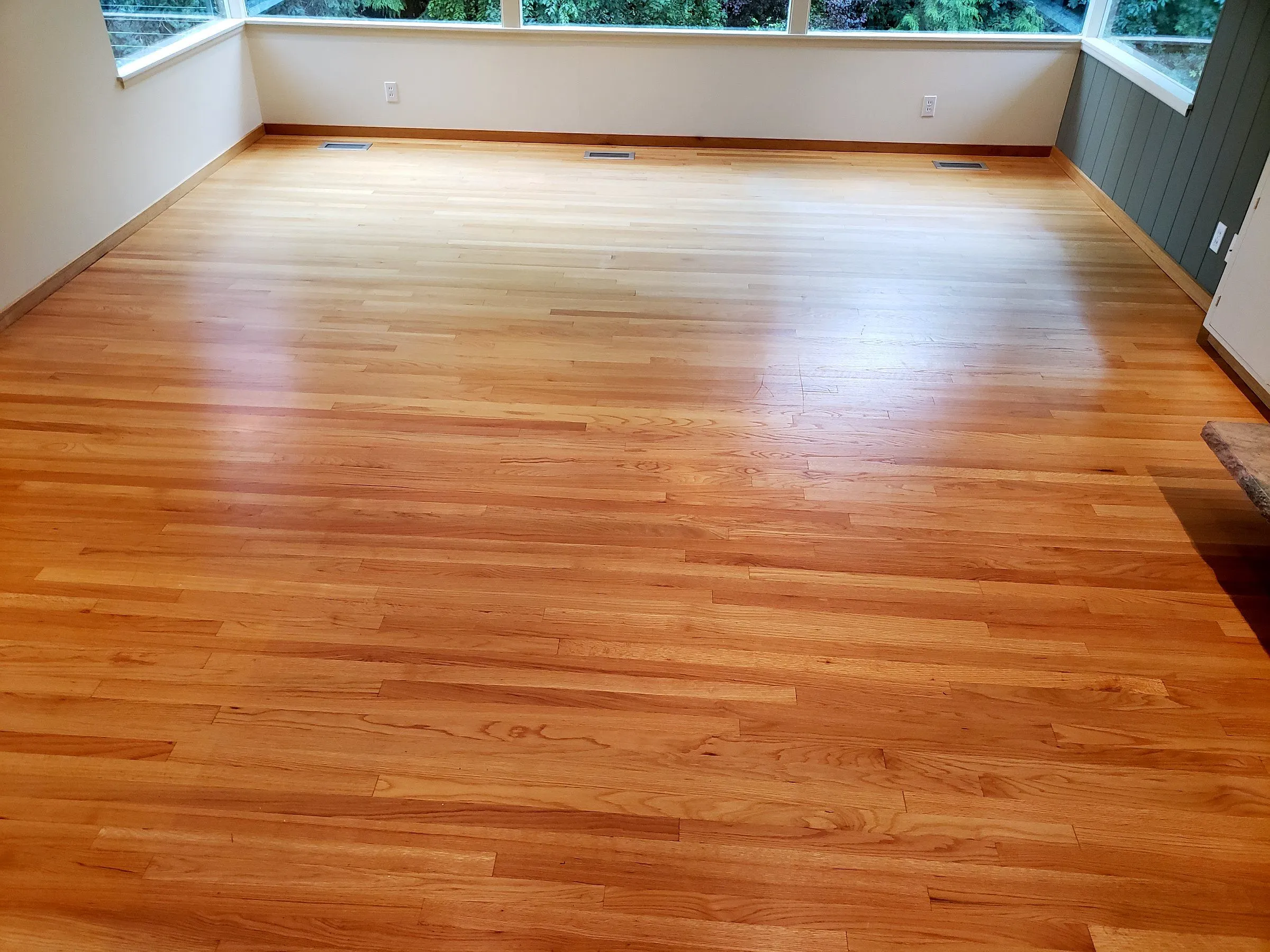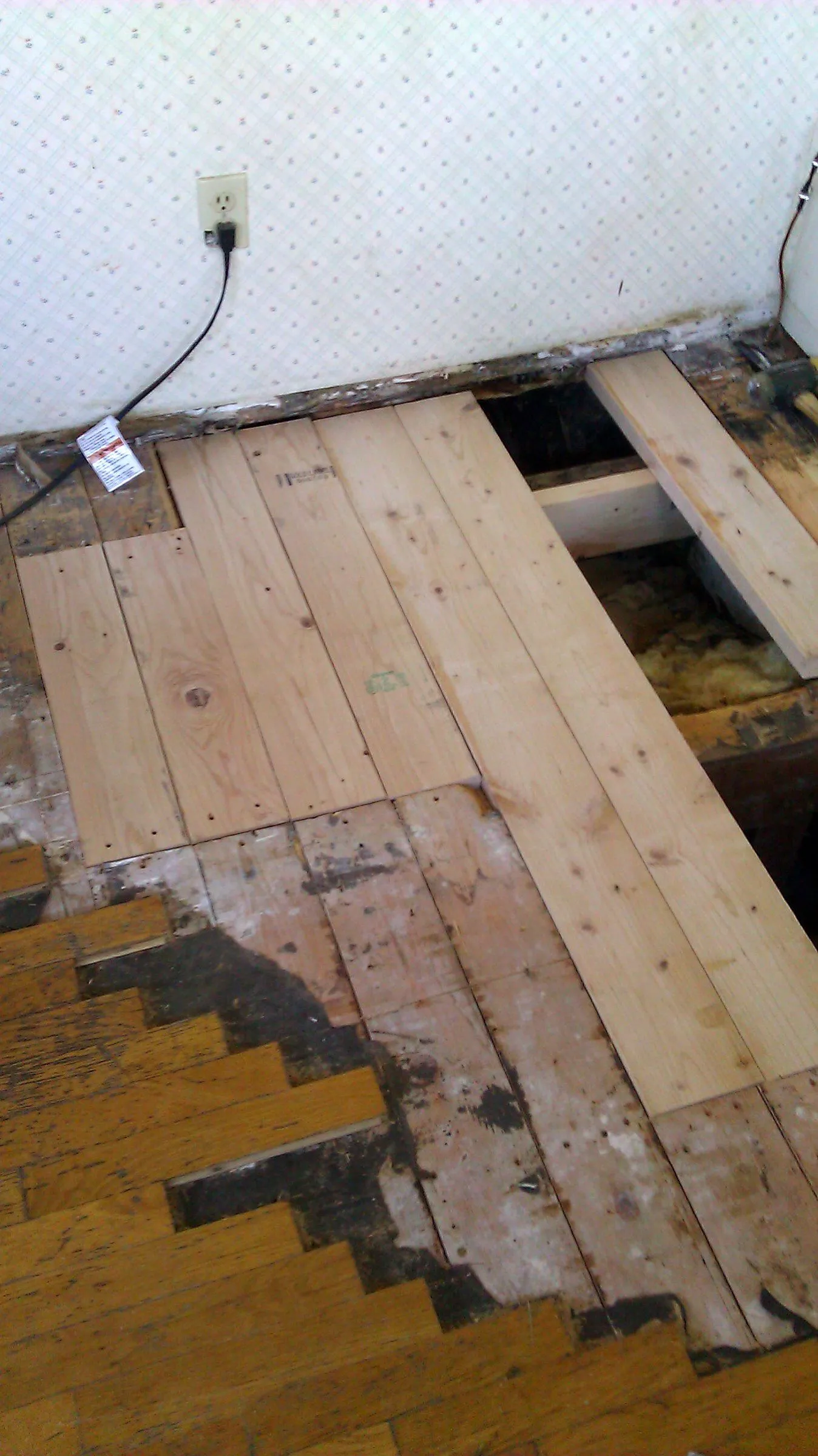

The short answer
- Thin gaps between boards in winter are normal. Heating dries the air, the wood gives up moisture and each board shrinks a little.
- Most of them close again in spring and summer, when the air gets more humid.
- Keep indoor humidity steady, roughly 30–50%, to keep gaps small. A hygrometer and a humidifier are the simplest tools.
- Don't fill seasonal gaps. Filler gets crushed or pushed out when the boards swell back in summer.
- Call a pro if gaps stay open all year, keep getting wider, or come with cupping, soft spots or squeaks that weren't there before.
Once the furnace has run for a few weeks, many homeowners notice thin lines between their floor boards and wonder if something is wrong. Usually nothing is. Wood is a natural material that takes on moisture and gives it back, and in a heated house in winter it gives some back.
We're Vision Flooring in Everett, WA. We refinish and install hardwood floors across Snohomish County and parts of King and Skagit Counties. Here's how to tell normal seasonal gaps from a real problem, and what to do about each.
Why do hardwood floors gap in winter?
Because heated winter air is dry, and dry air pulls moisture out of the wood. Each board shrinks a tiny bit across its width, and those tiny amounts add up to a visible line between boards.
Cold outdoor air holds little water. When it's heated inside your home, its relative humidity drops even further. Hardwood Floors magazine, published by the National Wood Flooring Association, explains that heating lowers indoor humidity and solid wood shrinks as it dries, and that some seasonal separation between boards is expected in nearly every wood floor.
Fall and winter
The heat is on and indoor air is dry. Boards shrink and thin gaps open, most often in the main living areas and near heat sources.
Spring and summer
The air is more humid again. Boards take moisture back, swell slightly, and most gaps close on their own.
Are some floors more likely to gap?
Yes. Wide boards, solid wood and square edges show it most.
 Wide planks
 Narrow strips
Wide planks show seasonal movement more per board than narrow strips.
- Wider boards move more per board than narrow strips, so each gap is wider, even if the floor moves the same overall.
- Solid hardwood moves more than engineered hardwood, whose layered core is more stable.
- Square-edge boards, typical for floors sanded and finished on site, show every gap. Factory-beveled edges hide small ones.
- Rooms near heat: next to a wood stove, fireplace, heat register or in a sunny window, the wood dries out faster.
None of these mean the floor was installed wrong. They just change how visible normal seasonal movement is.
How do I keep winter gaps small?
Keep the humidity in your home steady all year. Industry guidance, repeated in Hardwood Floors magazine, is a relative humidity of about 30–50% and temperatures of about 60–80°F. The EPA recommends the same 30–50% range for a healthy home. Always check your flooring manufacturer's own range too, since it decides your floor warranty.
1. Measure it
Put an inexpensive digital hygrometer in the main room. You can't manage what you don't measure, and many homes are much drier in January than people expect.
2. Add moisture in winter
A room humidifier helps in one area. A whole-house humidifier on the furnace is the most even solution if gaps show up every winter.
3. Don't overdo it
Stay at or below about 50%. Too much humidity brings condensation on windows and mold risk, and it can make wood swell and cup.
4. Keep heat moderate
Very warm rooms dry the wood more. Steady, moderate heat is easier on the floor than big swings.
Should I fill the gaps?
Not seasonal gaps. If you fill a gap in January, the boards swell back in summer and push against the filler. It cracks, pops out, or the boards are forced to cup. As Hardwood Floors magazine puts it, filler usually isn't a good idea for gaps that come and go with the seasons.
Wait through a full year first. If a gap is still open in late summer, when the floor is at its most swollen, it's a permanent gap. Then it can be repaired, usually at the next sanding and refinish.
Refinishing this winter?If you're planning a refinish, keeping your home's humidity in the normal range for a week or two before we start, and after, helps the new finish go on evenly and the floor settle well.
When are gaps a sign of a real problem?
When they don't follow the seasons, or when something else changes with them. Have the floor looked at if you notice any of these:
- Gaps that stay open all year, including late summer.
- Gaps that grow wider each year, or one very wide gap in a single spot.
- Cupping: board edges higher than the centers. That usually means moisture coming from below, like a damp crawlspace, a leak or a concrete slab, not dry air. One guide describes this well: gaps together with cupping point to a moisture problem, and filling the gaps fixes neither.
- Soft, bouncy or newly squeaky areas, which can mean the subfloor or fasteners need attention.
- Gaps right after a new installation, which can mean the wood wasn't acclimated or moisture-tested before it went down.
In Puget Sound homes, damp crawlspaces are a common source of moisture under floors. If you see cupping, check the crawlspace and look for plumbing leaks before anything else. If water got under your floor, see our guide to water-damaged floors.
How do flooring pros prevent problem gaps?
By getting the moisture right before a single board goes down. On every hardwood installation we:
- Let the wood acclimate inside your home, never in a garage, for the time the product needs.
- Moisture-test both the subfloor and the new wood and make sure they're close before installing.
- Choose an installation method that suits the board width, such as glue-assist for wide planks.
- Leave the expansion space the manufacturer requires at walls, covered by baseboards or quarter round.
See the full process in our hardwood installation guide, and why subfloor moisture matters in how to prep a subfloor.
Frequently asked questions
How wide can a normal seasonal gap be?
It depends on the board width, the wood and how dry your home gets. As a rough guide, gaps about the thickness of a coin in the middle of winter are common in solid strip floors, and wide planks show more. What matters most is whether they close again when the air is more humid.
Is engineered hardwood free of gaps?
It moves less than solid hardwood because of its layered core, but it isn't immune. Very dry air can still open small gaps.
Do LVP and laminate gap in winter?
LVP is barely affected by humidity. Laminate has a wood-fiber core, so it can move a little, which is one reason both are installed as floating floors with an expansion gap at the walls.
Will my warranty cover seasonal gaps?
Normal seasonal movement from humidity changes isn't a defect, so most flooring and workmanship warranties don't cover it. Keeping your home in the manufacturer's humidity range also protects the product warranty.