The short answer
- Expect surprises. Hidden damage shows up once walls and floors are opened, so plan a contingency.
- Most delays come from materials, inspections and trades waiting on each other. Build in buffer time.
- A reliable contractor answers quickly, puts everything in writing and shows up when they say they will.
- Plan the floors early. They depend on almost every other trade, and they're one of the last things finished.
For 20 years, we did it all: kitchens, bathrooms, water damage restoration and whole-home remodels. Today, Vision Flooring focuses only on floors and baseboards. That's the work we're best at, and it gets our full attention.
Those years taught us where remodels go wrong and why. Here are the pain points homeowners ask about most, what actually causes them, and how to keep your flooring from becoming one of them.
What hidden problems come up during a remodel?
The most common are old leaks, rot, outdated wiring or plumbing, and damaged subfloors that only show up once walls and floors are opened. Nobody can see through drywall or flooring, so a good estimate always explains what happens if something hidden turns up.
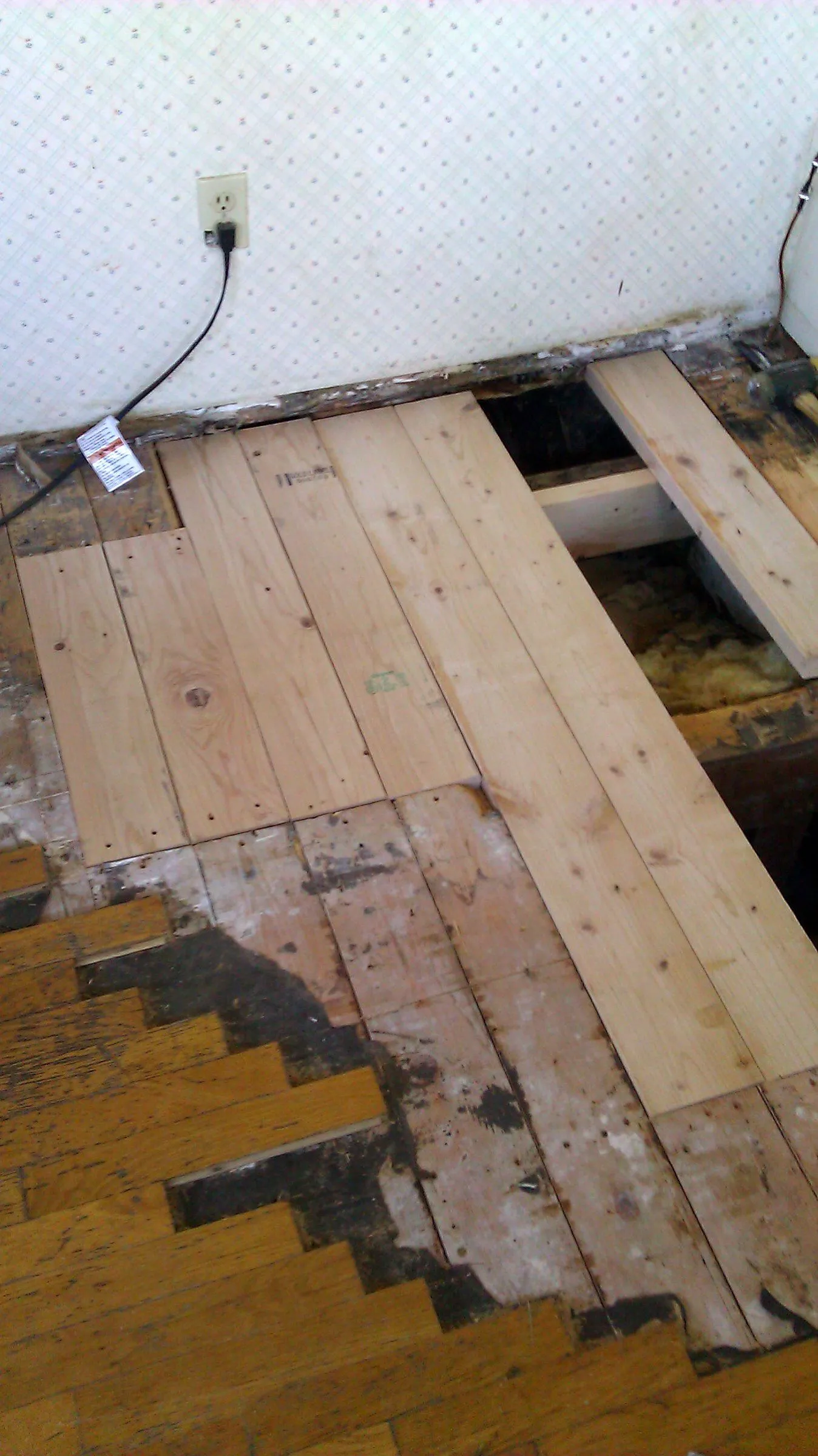
What we find under old floors
- Water-damaged or soft subfloor, often near toilets, tubs, dishwashers and exterior doors
- Old sheet vinyl over particle board, which usually has to come out
- Glue, patches and uneven spots that need sanding or leveling
- Loose panels that cause squeaks
Some older vinyl flooring and the black adhesive underneath it can contain asbestos, especially in homes built before the 1980s. If there's any doubt, the material should be tested before anyone disturbs it. The EPA lists vinyl flooring and its adhesives among the places asbestos can be found.
How we handle surprisesIf we find a hidden problem after the old floor comes up, we stop and show you. Then we explain the fix and put the cost in a written change order. You approve it before we do the extra work.

Why do remodeling projects take longer than expected?
Delays usually come from four places: permits and inspections, material lead times, hidden problems, and trades waiting on each other. One late delivery can push back every trade behind it.
Flooring has its own timing that's easy to forget:
- Acclimation: hardwood and laminate sit inside your home for 3–5 days before installation. LVP usually doesn't need to.
- Drying time: drywall mud, paint and self-leveling compound need to dry before wood floors go down.
- Finish time: a site-finished hardwood floor needs time after the last coat before furniture comes back.
- Material orders: specialty hardwood and matching boards can take time to arrive.
Order flooring early and tell your contractor about acclimation, so the floor doesn't hold up the finish line.
Can I live in my home during a remodel or new floor installation?
Usually yes, with some planning. Seal off work areas, set up a temporary kitchen if yours is torn out, and keep kids and pets away from tools and debris. For floors specifically, it depends on the kind of work.
- LVP, laminate and prefinished hardwood: you can usually walk on the floor and put furniture back right away. Fully glued-down floors may need 2–3 days first.
- Sanding and refinishing: plan to be out while stain and finish are applied. You can usually come back the next day, put furniture back after three full days, and lay rugs after one week (three weeks with Swedish finish).
- Dust: we use dust-control equipment and masking when refinishing, and we cut flooring outside whenever practical.

Why is remodeling so stressful, and how can I make it easier?
Most remodeling stress comes from not knowing what's happening next. Disruption is part of any project, but surprises and silence make it much harder.
- Get the full scope in writing before work starts, so everyone is working from the same list.
- Ask for a daily heads-up on what happens today and tomorrow.
- Break big projects into phases so part of the house stays livable.
- Know who to call when something doesn't look right.
How do I find a reliable contractor?
Check that they're registered, read their reviews, and judge them by how they handle the estimate. A contractor who's slow, vague or pushy before the job usually doesn't get better once they have your deposit.
- Verify registration. In Washington, look up any contractor on the L&I Verify a Contractor tool.
- Read recent reviews on Google and other sites, and look at real project photos.
- Get a written, itemized estimate. Removal, prep and extras should be separate lines, not hidden in one number.
- Ask how changes are handled. The answer should be "in writing, before the work."
- Get the warranty in writing, and know what it covers.
- Notice how fast they respond. Communication during the estimate is a preview of the job.
How we run every flooring job
Twenty years of remodeling taught us that the process matters as much as the work. Here's what working with Vision Flooring looks like.
- Quick response. New inquiries get a reply the same business day.
- Free in-home estimate. We measure, look at the subfloor, bring samples and explain your options honestly.
- Itemized written estimate. Removal, prep, appliances and extras are listed separately. Estimates are valid for 30 days.
- Scheduling and materials. You approve the estimate and place a deposit (typically 50%). We order materials and let them acclimate when needed.
- Confirmation. We check in 1–2 days before the start date and give you an arrival time.
- Day one. We review the plan with you, and the scope sheet is posted on a wall so you and the crew work from the same list. Same plan for everyone
- Clean, communicative work. We clean up every day and tell you what's happening next.
- Walkthrough and warranty. We walk the finished floor with you. You get a project and warranty package, plus our Limited One-Year Workmanship Warranty. Final payment is due on completion, within 30 days.
How do I keep a remodel on budget?
Get itemized estimates, separate must-haves from nice-to-haves, and set money aside for surprises. Many remodelers suggest a contingency of about 10–20% of the project cost.
For flooring, ask what's included and what isn't. Material, removal of the old floor, subfloor leveling, appliance moves and baseboards are often separate. Our prices are listed as approximate guidelines, and your written estimate shows every line. For a quick ballpark, try our free flooring calculator. Projects have an $800 minimum.
How do I avoid scope creep?
Write down the plan before work starts, and put every change in writing with its cost before it happens. Small "while we're at it" additions add up fast.
One exception is worth considering: if you plan to replace your floors within a few years anyway, doing them during a remodel is often cheaper and easier. The rooms are already empty, the baseboards are already off, and nobody has to move out twice.
Should I install new floors myself to save money?
Some prep is great DIY. The installation itself is where mistakes get expensive. Pulling carpet, moving furniture and painting before the floor goes in can save you money. Flooring problems we're often called to fix usually come from missed expansion gaps, skipped acclimation, an uneven subfloor or the wrong underlayment. Those are hard to undo without starting over. Read why hiring a professional flooring contractor matters.
When should new floors go in during a remodel?
Near the end, after the messy work. Floors usually go in after drywall and the first coats of paint. In kitchens, it depends on the flooring: nail-down hardwood can go in before the cabinets, while floating floors go in after. We cover the full order in flooring before or after cabinets.
Does Vision Flooring still do full remodels?
No. After 20 years of full remodeling, we now focus only on hardwood, LVP, laminate and baseboards. We can do the floors for a remodel you're running yourself, or work alongside your general contractor. And because we've been on the other side, we're happy to help you plan the order of the rest of the project.
Remodeling experience, focused on floors
Everything we learned in 20 years of remodeling now goes into one thing: floors and baseboards done right.
20+ yearsin construction and remodeling
Same dayreplies to new inquiries during business hours
In writingitemized estimates and change orders
1-yearLimited Workmanship Warranty on our work